Blogs

Exploring Turkey's Most Remarkable Historical Sites

Turkey boasts an extraordinary tapestry of history, an intricate blend of architecture, civilizations, and culture that bridges the past and the present, creating a canvas of beauty and creativity. Its ancient ruins and magnificent palaces invite us to embark on a journey through time and immerse ourselves in the captivating stories etched into the very fabric of this nation. Join us as we traverse this fascinating land and uncover the top historical sites that should be on your must-visit list.

Ephesus:

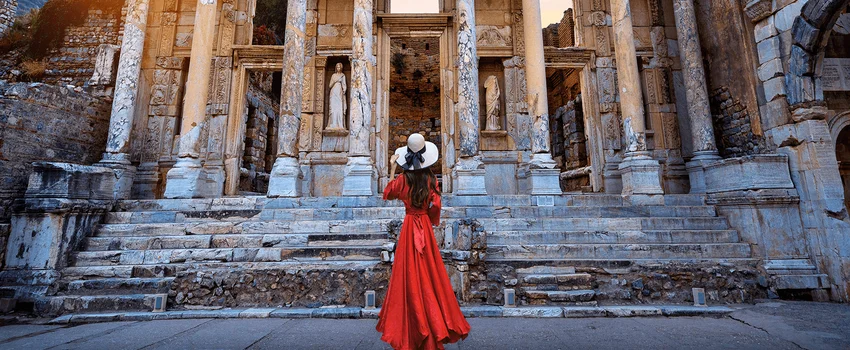
Our voyage through history commences in Ephesus, a true gem among ancient Greek cities, with its roots dating back to the 10th century BC. Nestled in the historical Lydia region of western Anatolia, Ephesus enjoys a mild climate and breathtaking natural vistas, overlooking the Kester River as it meanders toward the Aegean Sea. It's where archaeological wonders abound, including the awe-inspiring Temple of Artemis, one of the ancient world's most remarkable temples dedicated to the goddess Artemis. The Celsus Library and the Great Ephesus Theater, with seating for 25,000 spectators, also grace this historic landscape​.Ephesus' remnants continue to attract connoisseurs from across the globe, seeking to connect with the grandeur of civilizations long past.
Location      

Operating Hours: 8:00 AM to 7:30 PM

Contact: +90 232 892 60 10

For more information click here

Hagia Sophia:

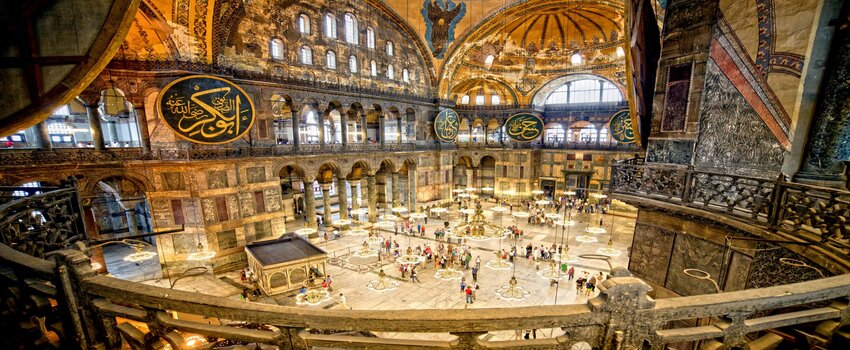
Our journey then takes us to Hagia Sophia, the Divine Wisdom, on Istanbul's European side. This architectural marvel is renowned for its mesmerizing mosaics adorning its walls and its colossal dome, one of the world's most robust and huge. Hagia Sophia is a UNESCO World Heritage Site. In addition, Asymbol of historical significance.Initially known as the Great Church due to its sheer size, it underwent several transformations over the centuries, including fires and rebuilds. After the Ottoman conquest of Constantinople, they repurposed it as the Noble Grand Mosque of Hagia Sophia for nearly five centuries. In 1935, it was transformed into a historical museum, becoming one of Turkey's most visited. In a recent chapter of its history,Hagia Sophia  was reopened as a mosque in 2020, making it a prominent tourist destination and one of Turkey's historical treasures.

Hagia_Sophia_Interior_2.jpg

Location

Operating Hours: Open 24/7

Contact: +90 212 522 17 50

Cappadocia:

Let's delve into Cappadocia, a region characterized by surreal natural landscapes, cave churches, underground cities carved into volcanic rocks, and the vibrant display of colorful hot air balloons that grace its skies. This unique land is also known for its "fairy chimneys," a fascinating geological phenomenon.Cappadocia resides in the Nevşehir province of eastern Anatolia, central Turkey. The origin of its name is a subject of debate, with some tracing it to the god "Khabbat" and others to the Assyrian king's son, "Kappadox." Nevertheless, it universally translates to "land of beautiful horses," paying homage to the Yildiz horses that roam freely in its depth.Over millennia, Cappadocia witnessed the rise and fall of numerous civilizations, from the Assyrians and Persians to Turkish rule and the founding of the modern Turkish Republic in 1923. Today, Cappadocia is a historical treasure within the Nevşehir region recognized globally for its cultural and religious significance. UNESCO has bestowed its prestigious World Heritage status upon this region, highlighting its natural wonders, cave churches, monasteries, and a network of underground cities that served as havens during many times of conflict.

Cappadocia.jpg

Troy:

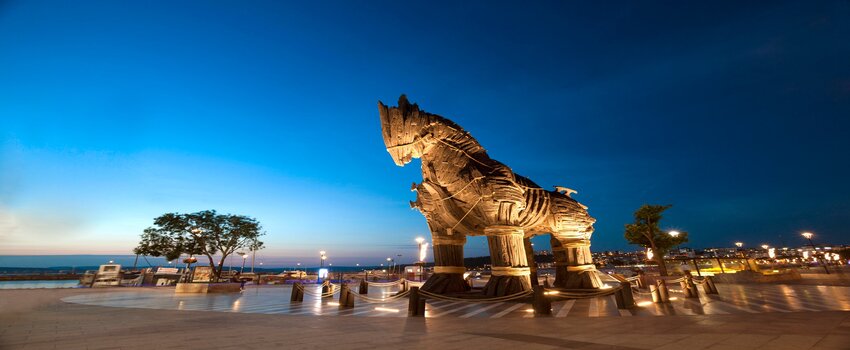
Our journey through time takes us to the walls of Troy, where archaeological remnants offer a glimpse into the days of the Trojan War. Designated as a UNESCO World Heritage Site, Troy is one of Turkey's most prominent and renowned historical treasures.Situated in northwestern Turkey, specifically in the province of Çanakkale, Troy's name is inseparable from the legendary Trojan Horse. Discovered by German businessman Heinrich Schliemann in 1870, its history dates back to 3000 BC.The city of Troy experienced ten phases of development, with the Romans eventually constructing a city in honor of their legendary ancestor, the Trojan hero Aeneas. In 1996, the Council of Ministers of the Republic of Turkey designated Troy and its environs as the Troy National Historical Park, solidifying its status as a cultural touchstone.
Troy.jpg

Topkapı Palace:

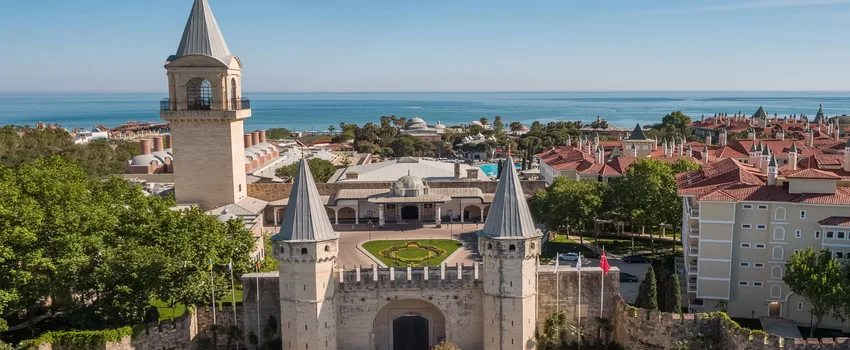
Next, we venture into the opulent world of Topkapı Palace, an embodiment of Ottoman architecture and a repository of priceless artifacts. Sultan Mehmed the Conqueror oversaw its construction between 1459 and 1465, using it as his residence and the seat of Ottoman power for four centuries.Following the decline of the Ottoman Empire, Topkapı Palace transformed into a museum in 1924, opening its doors to the public. Today, it ranks among Turkey's most coveted tourist destinations and historical landmarks. Notably, it harbors an extensive collection of Islamic relics, including belongings attributed to the Prophet Muhammad and his companions, as relics from various Muslim caliphs throughout history.
Location

Operating Hours: Open daily (except Tuesdays) from 10:00 AM to 4:00 PM

Contact: +90 212 512 04 80

Pamukkale:

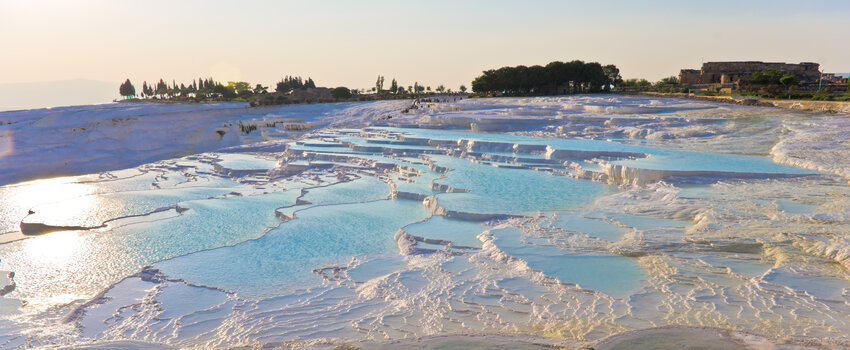
Our voyage continues to Pamukkale, celebrated for its iconic white terraces formed by mineral-rich hot springs and its association with the ancient Roman city of Hierapolis.Located in Denizli, approximately 200 km south of Antalya, Pamukkale's natural thermal baths are a product of limestone accumulation and volcanic mud. These natural wonders, aptly nicknamed "Cotton Castles" for their ethereal appearance, draw millions of tourists each year from across the globe. Pamukkale's allure also lies in its wealth of ancient Roman ruins, including a Roman theater and arena, earning it a place on UNESCO's prestigious World Heritage list.
Pamukkale.jpg

Location

Pergamon:

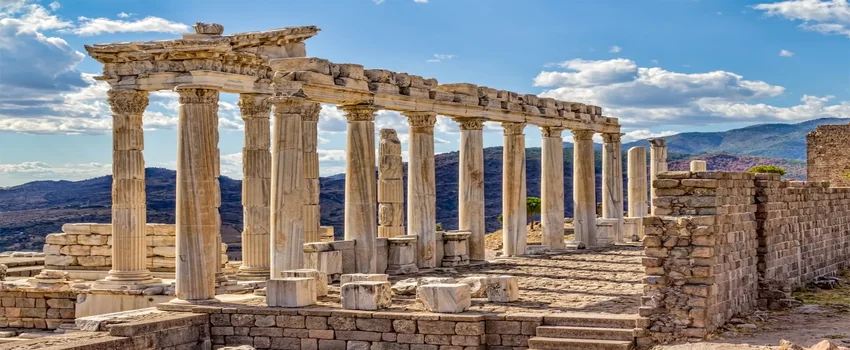
Our journey leads us to Pergamon, a city with a rich cultural and political legacy, eventful with landmarks, ruins, and an ancient theater.Situated approximately 26 km from the Aegean Sea, Pergamon served as the capital of the Kingdom of Pergamon during the Hellenistic period from 281-133 BC. It gained fame for its monumental Great Altar, one of the largest in the ancient world, and was home to the renowned Pergamon Library, among the most extensive libraries of its time. The colossal Temple of Zeus further underscores Pergamon's grandeur. This historical gem was designated a UNESCO World Heritage Site in 2014, securing its place among Turkey's most significant archaeological sites.
Location

Operating Hours: 6:30 AM to 8:30 PM

Contact: +90 232 631 28 83

Aphrodisias:

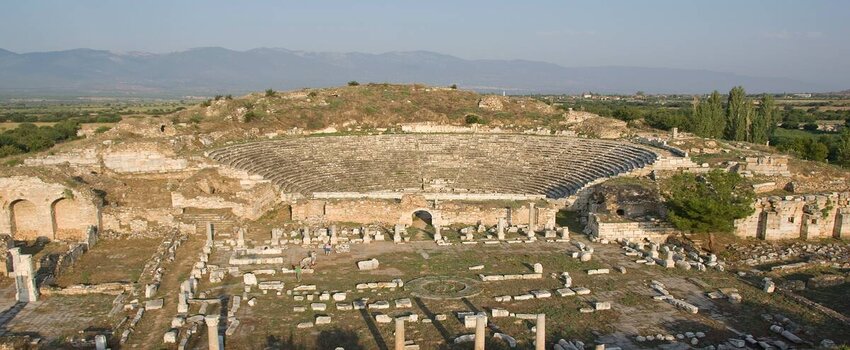
We now pivot our gaze toward Aphrodisias, a symbol of love graced by romantic Roman ruins in the historic region of Caria in western Anatolia. Founded in the 6th century BC as a sanctuary dedicated to the Greek goddess Aphrodite, Aphrodisias flourished during the Roman period, earning renown for its beauty and artistic achievements. It also served as a thriving center for commerce and culture, attracting esteemed artists and sculptors.Aphrodisias boasts the Temple of Aphrodite, one of the ancient world's most prominent and expansive temples, alongside the Library of Celsus and the Theater of Aphrodisias, both remarkable in their own right. Since 1979, these treasures have been curated in the Aphrodisias Museum, securing a coveted spot on UNESCO's World Heritage List in 2017.
Aphrodisias.jpg

Location

Operating Hours: 9:00 AM to 6:00 PM

Contact: +90 256 448 80 86

Nemrut Mount:

Our odyssey takes us to Nemrut Mount, a sanctuary of colossal statues and the world's premier destination to witness breathtaking sunrises and sunsets.Nemrut Mount sits in the Adıyaman province of southeastern Turkey. It is renowned for its giant statues, representing both gods and rulers of the ancient Kingdom of Commagene, which once reigned in the 1st century BC under the rule of King Antiochus I. Carved in a Greek style with distinct Persian-inspired clothing designs, these statues captivate visitors from around the globe.Designated as a national park and the highest open-air museum globally, with an elevation of approximately 2,150 meters, Nemrut Mount earned its rightful place as a UNESCO World Heritage Site, acknowledging its contributions to science, education, and culture.
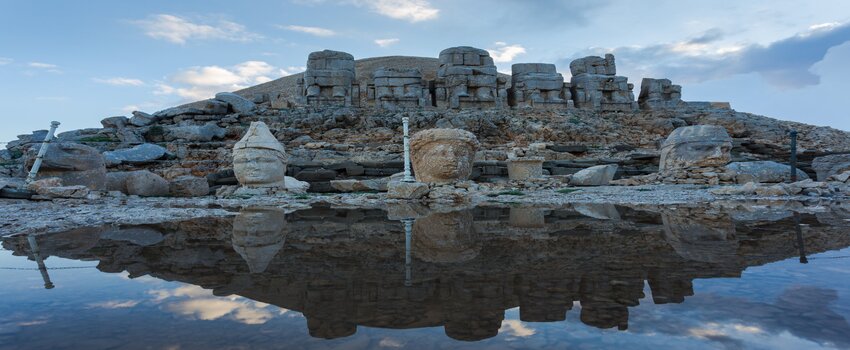
20Mount.jpg

Location

Ani:

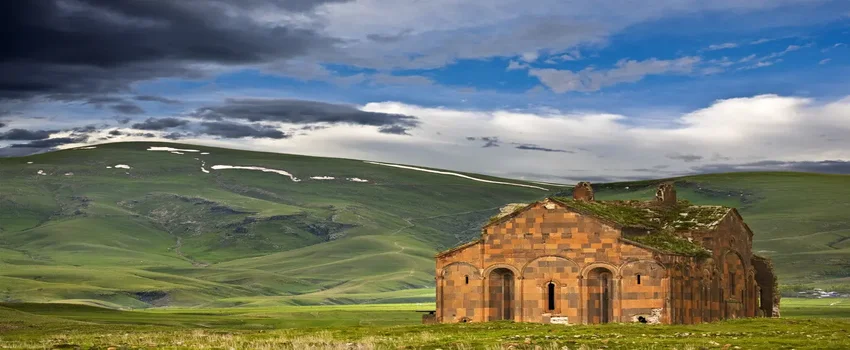
Our final destination brings us to the historic city of Ani, a medieval marvel that once thrived in the eastern Turkish province of Kars. Serving as the capital of the Armenian Bagratid Kingdom between the 10th and 13th centuries, Ani's ruins are a testament to its former glory.Known by various monikers, including "the city of the world and the cradle of civilizations," "the city of a thousand churches," and "the city of forty gates," Ani stands as a treasure trove of historical monuments, encompassing churches, monasteries, palaces, and baths. The Church of St. Gregory is among its most renowned archaeological sites. It gained recognition as a UNESCO World Heritage Site in 2016, cementing its status as a must-visit destination among Turkey's historical sites.
Location

If you've journeyed this far, your passion for exploration and the joy of uncovering cultures and lives preserved by time yet immortalized by history is undeniable. These extraordinary places transcend mere time and space; they are an invitation to marvel at the grand achievements of civilizations past and a reminder of Turkey's rich cultural heritage and the importance of its preservation.


1
Exploring Turkey's Most Remarkable Historical Sites

Turkey boasts an extraordinary tapestry of history, an intricate blend of architecture, civilizations, and culture that bridges the past and the present, creating a canvas of beauty and creativity. Its ancient ruins and magnificent palaces invite us to embark on a journey through time and immerse ourselves in the captivating stories etched into the very fabric of this nation. Join us as we traverse this fascinating land and uncover the top historical sites that should be on your must-visit list.

Ephesus:

Our voyage through history commences in Ephesus, a true gem among ancient Greek cities, with its roots dating back to the 10th century BC. Nestled in the historical Lydia region of western Anatolia, Ephesus enjoys a mild climate and breathtaking natural vistas, overlooking the Kester River as it meanders toward the Aegean Sea. It's where archaeological wonders abound, including the awe-inspiring Temple of Artemis, one of the ancient world's most remarkable temples dedicated to the goddess Artemis. The Celsus Library and the Great Ephesus Theater, with seating for 25,000 spectators, also grace this historic landscape​.Ephesus' remnants continue to attract connoisseurs from across the globe, seeking to connect with the grandeur of civilizations long past.

Location      

Operating Hours: 8:00 AM to 7:30 PM

Contact: +90 232 892 60 10

For more information click here

Hagia Sophia:

Our journey then takes us to Hagia Sophia, the Divine Wisdom, on Istanbul's European side. This architectural marvel is renowned for its mesmerizing mosaics adorning its walls and its colossal dome, one of the world's most robust and huge. Hagia Sophia is a UNESCO World Heritage Site. In addition, Asymbol of historical significance.Initially known as the Great Church due to its sheer size, it underwent several transformations over the centuries, including fires and rebuilds. After the Ottoman conquest of Constantinople, they repurposed it as the Noble Grand Mosque of Hagia Sophia for nearly five centuries. In 1935, it was transformed into a historical museum, becoming one of Turkey's most visited. In a recent chapter of its history,Hagia Sophia  was reopened as a mosque in 2020, making it a prominent tourist destination and one of Turkey's historical treasures.

Hagia_Sophia_Interior_2.jpg

Location

Operating Hours: Open 24/7

Contact: +90 212 522 17 50

Cappadocia:

Let's delve into Cappadocia, a region characterized by surreal natural landscapes, cave churches, underground cities carved into volcanic rocks, and the vibrant display of colorful hot air balloons that grace its skies. This unique land is also known for its "fairy chimneys," a fascinating geological phenomenon.Cappadocia resides in the Nevşehir province of eastern Anatolia, central Turkey. The origin of its name is a subject of debate, with some tracing it to the god "Khabbat" and others to the Assyrian king's son, "Kappadox." Nevertheless, it universally translates to "land of beautiful horses," paying homage to the Yildiz horses that roam freely in its depth.Over millennia, Cappadocia witnessed the rise and fall of numerous civilizations, from the Assyrians and Persians to Turkish rule and the founding of the modern Turkish Republic in 1923. Today, Cappadocia is a historical treasure within the Nevşehir region recognized globally for its cultural and religious significance. UNESCO has bestowed its prestigious World Heritage status upon this region, highlighting its natural wonders, cave churches, monasteries, and a network of underground cities that served as havens during many times of conflict.

Cappadocia.jpg

Troy:

Our journey through time takes us to the walls of Troy, where archaeological remnants offer a glimpse into the days of the Trojan War. Designated as a UNESCO World Heritage Site, Troy is one of Turkey's most prominent and renowned historical treasures.Situated in northwestern Turkey, specifically in the province of Çanakkale, Troy's name is inseparable from the legendary Trojan Horse. Discovered by German businessman Heinrich Schliemann in 1870, its history dates back to 3000 BC.The city of Troy experienced ten phases of development, with the Romans eventually constructing a city in honor of their legendary ancestor, the Trojan hero Aeneas. In 1996, the Council of Ministers of the Republic of Turkey designated Troy and its environs as the Troy National Historical Park, solidifying its status as a cultural touchstone.

Troy.jpg

Topkapı Palace:

Next, we venture into the opulent world of Topkapı Palace, an embodiment of Ottoman architecture and a repository of priceless artifacts. Sultan Mehmed the Conqueror oversaw its construction between 1459 and 1465, using it as his residence and the seat of Ottoman power for four centuries.Following the decline of the Ottoman Empire, Topkapı Palace transformed into a museum in 1924, opening its doors to the public. Today, it ranks among Turkey's most coveted tourist destinations and historical landmarks. Notably, it harbors an extensive collection of Islamic relics, including belongings attributed to the Prophet Muhammad and his companions, as relics from various Muslim caliphs throughout history.

Location

Operating Hours: Open daily (except Tuesdays) from 10:00 AM to 4:00 PM

Contact: +90 212 512 04 80

Pamukkale:

Our voyage continues to Pamukkale, celebrated for its iconic white terraces formed by mineral-rich hot springs and its association with the ancient Roman city of Hierapolis.Located in Denizli, approximately 200 km south of Antalya, Pamukkale's natural thermal baths are a product of limestone accumulation and volcanic mud. These natural wonders, aptly nicknamed "Cotton Castles" for their ethereal appearance, draw millions of tourists each year from across the globe. Pamukkale's allure also lies in its wealth of ancient Roman ruins, including a Roman theater and arena, earning it a place on UNESCO's prestigious World Heritage list.

Pamukkale.jpg

Location

Pergamon:

Our journey leads us to Pergamon, a city with a rich cultural and political legacy, eventful with landmarks, ruins, and an ancient theater.Situated approximately 26 km from the Aegean Sea, Pergamon served as the capital of the Kingdom of Pergamon during the Hellenistic period from 281-133 BC. It gained fame for its monumental Great Altar, one of the largest in the ancient world, and was home to the renowned Pergamon Library, among the most extensive libraries of its time. The colossal Temple of Zeus further underscores Pergamon's grandeur. This historical gem was designated a UNESCO World Heritage Site in 2014, securing its place among Turkey's most significant archaeological sites.

Location

Operating Hours: 6:30 AM to 8:30 PM

Contact: +90 232 631 28 83

Aphrodisias:

We now pivot our gaze toward Aphrodisias, a symbol of love graced by romantic Roman ruins in the historic region of Caria in western Anatolia. Founded in the 6th century BC as a sanctuary dedicated to the Greek goddess Aphrodite, Aphrodisias flourished during the Roman period, earning renown for its beauty and artistic achievements. It also served as a thriving center for commerce and culture, attracting esteemed artists and sculptors.Aphrodisias boasts the Temple of Aphrodite, one of the ancient world's most prominent and expansive temples, alongside the Library of Celsus and the Theater of Aphrodisias, both remarkable in their own right. Since 1979, these treasures have been curated in the Aphrodisias Museum, securing a coveted spot on UNESCO's World Heritage List in 2017.

Aphrodisias.jpg

Location

Operating Hours: 9:00 AM to 6:00 PM

Contact: +90 256 448 80 86

Nemrut Mount:

Our odyssey takes us to Nemrut Mount, a sanctuary of colossal statues and the world's premier destination to witness breathtaking sunrises and sunsets.Nemrut Mount sits in the Adıyaman province of southeastern Turkey. It is renowned for its giant statues, representing both gods and rulers of the ancient Kingdom of Commagene, which once reigned in the 1st century BC under the rule of King Antiochus I. Carved in a Greek style with distinct Persian-inspired clothing designs, these statues captivate visitors from around the globe.Designated as a national park and the highest open-air museum globally, with an elevation of approximately 2,150 meters, Nemrut Mount earned its rightful place as a UNESCO World Heritage Site, acknowledging its contributions to science, education, and culture.

20Mount.jpg

Location

Ani:

Our final destination brings us to the historic city of Ani, a medieval marvel that once thrived in the eastern Turkish province of Kars. Serving as the capital of the Armenian Bagratid Kingdom between the 10th and 13th centuries, Ani's ruins are a testament to its former glory.Known by various monikers, including "the city of the world and the cradle of civilizations," "the city of a thousand churches," and "the city of forty gates," Ani stands as a treasure trove of historical monuments, encompassing churches, monasteries, palaces, and baths. The Church of St. Gregory is among its most renowned archaeological sites. It gained recognition as a UNESCO World Heritage Site in 2016, cementing its status as a must-visit destination among Turkey's historical sites.

Location

If you've journeyed this far, your passion for exploration and the joy of uncovering cultures and lives preserved by time yet immortalized by history is undeniable. These extraordinary places transcend mere time and space; they are an invitation to marvel at the grand achievements of civilizations past and a reminder of Turkey's rich cultural heritage and the importance of its preservation.


2 3 4 5 6 7 8 9

Sign up for our newsletter

Register now to receive the latest news by email

Insaattan

app.download.description